Diagnose
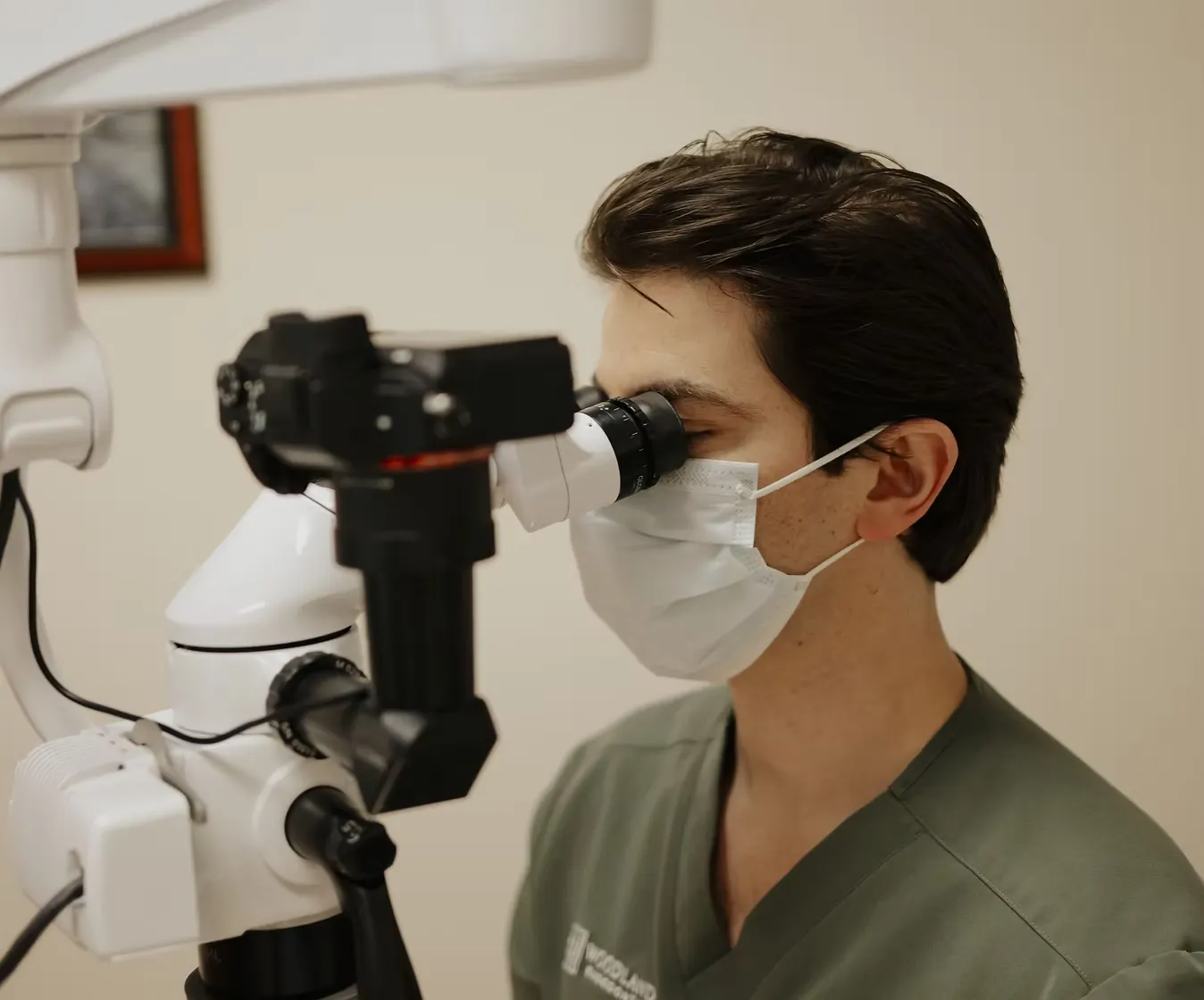
Microscope examination, testing, and imaging pinpoint the problem and confirm the tooth can be saved.

Endodontic Treatment
Gentle, microscope-guided care that relieves pain and saves your natural tooth, so you can keep the smile you were born with.
Call (281) 681-0100Treatment Explained
Root canal therapy treats infection or severe inflammation inside a tooth. At Woodlands Endodontics, root canals save teeth that would otherwise need to be extracted, preserving your natural smile and avoiding the long-term complications that come with tooth loss. Despite their reputation, modern root canals are routine, performed under local anesthesia, and typically no more uncomfortable than getting a filling.

Looking for Root Canal Treatment in The Woodlands, TX? Root canal therapy treats infection or severe inflammation in the pulp inside a tooth, relieving pain and saving teeth that would otherwise be lost. As an endodontic specialty practice, root canal treatment is the core of what Woodlands Endodontics does every day, and that focus shows in the details: every case is performed under a surgical operating microscope, guided by advanced imaging, using techniques refined across thousands of procedures. Despite the procedure's old reputation, a modern specialist root canal is routine, performed under profound local anesthesia, and typically no more uncomfortable than a filling.
Inside every tooth is a chamber of soft tissue called pulp: nerves, blood vessels, and connective tissue. When deep decay, a crack, repeated dental work, or trauma lets bacteria reach the pulp, the resulting inflammation has nowhere to expand inside the rigid tooth, which is why an infected tooth can hurt so intensely. Treatment removes the diseased pulp, then cleans, disinfects, shapes, and seals the entire canal system. The specialist difference lives in that phrase "entire canal system": teeth routinely hide extra canals, fins, and curves that are nearly invisible without magnification, and unfound anatomy is a leading cause of treatment failure. The microscope, 3D imaging when anatomy demands it, and advanced irrigation exist to make sure nothing stays hidden.
Most treatments are completed in one or two visits, and patients typically feel dramatic relief from the original pain almost immediately. Afterward, your general dentist usually places a crown or permanent restoration to protect the tooth, which can then serve you for decades, often for life. Long-term success rates for specialist root canal treatment are excellent, and keeping your natural tooth preserves the bone, feel, and function that no replacement fully matches.
Many of our patients arrive anxious, in pain, or both, often referred by their dentist for a tooth that needs more than routine care. Our first priorities are always comfort and clarity: profound anesthesia before anything begins, a clear explanation of what we found, and honest answers about the tooth's outlook. If a tooth can't be saved, we say so plainly rather than treating for treatment's sake.
Clinically, every root canal here receives the specialist standard: surgical microscope magnification for every case, CBCT 3D imaging when anatomy or diagnosis calls for it, and advanced disinfection techniques that pursue the canal system's hidden spaces. We complete treatment efficiently, often in a single visit, and we coordinate the final restoration with your general dentist, who receives our full report and imaging. You get the tooth saved; your dentist gets a patient returned with everything they need.
The Process
Microscope examination, testing, and imaging pinpoint the problem and confirm the tooth can be saved.
Profound local anesthesia is placed and verified before treatment begins. Comfort first, always.
The full canal system, including hidden anatomy found under magnification, is cleaned, disinfected, and shaped.
Canals are sealed with biocompatible material, and your dentist places the final restoration once healing is confirmed.
Common Questions
Straight answers to the questions we hear most about root canal treatment. Don't see yours? Give our team a call. We're always happy to help.
Modern root canal treatment is designed to relieve pain, not cause it. The procedure is performed under profound local anesthesia, and most patients compare it to getting a filling. Mild tenderness for a few days afterward is normal and manages well with over-the-counter pain relievers. If you arrived in pain, you will almost certainly leave feeling better.
Endodontists complete two or more years of additional training focused on root canal treatment and perform these procedures daily, with equipment most general practices don't carry: surgical operating microscopes, CBCT 3D imaging, and advanced irrigation systems. For straightforward cases a good general dentist does excellent work; for complex anatomy, calcified canals, retreatments, and difficult diagnoses, specialist care measurably improves outcomes.
Most root canals here are completed in one or two visits of roughly 60 to 90 minutes. Whether one visit is appropriate depends on the infection's severity and the tooth's anatomy, and we will tell you the plan after diagnosis. Single-visit treatment is common when conditions allow.
Classic signs include lingering pain after hot or cold, spontaneous or nighttime toothache, pain when chewing, gum swelling or a pimple-like bump near a tooth, and darkening of a tooth. Some infected teeth cause no symptoms and are found on X-rays. Any of these deserves prompt evaluation, and early treatment is easier treatment.
Specialist root canal treatment has excellent long-term success rates, with the large majority of treated teeth remaining healthy and functional for many years, often for life. Success depends on thorough cleaning of the canal system and a good final restoration, which is exactly why magnification and coordination with your dentist matter.
Pulp infection doesn't heal on its own. Delay lets infection spread into the surrounding bone, can turn a treatable tooth into an extraction, and trades a routine appointment for an emergency. If cost or fear is holding you back, tell us; both have solutions, and neither improves by waiting.
Usually, especially for molars that take heavy chewing forces. The tooth becomes more brittle after treatment, and a crown protects it for the long term. Your general dentist typically places the final restoration; we coordinate the timing with them and confirm healing first.
No, and honesty about that is part of specialist care. Teeth with severe fractures, insufficient remaining structure, or advanced bone loss are sometimes better replaced. Our microscope examination and imaging tell us which situation yours is, and we will give you a straight answer either way.
No. Many patients are referred by their dentists, but you can contact us directly, especially if you are in pain. We coordinate with your regular dentist afterward for the final restoration and ongoing care.
Whether you’re a patient in pain or a dentist referring a case, we’re ready to help. Reach out and our team will take great care of you.
Schedule an Appointment